
Breaking11 sources covering
NASA's Voyager 1 space probe is now one light-day away from Earth
Engadget ·
Updated 40m ago
- 8 more outlets picked it up in the last 3 hours, most recently The Verge, Engadget, Wired.
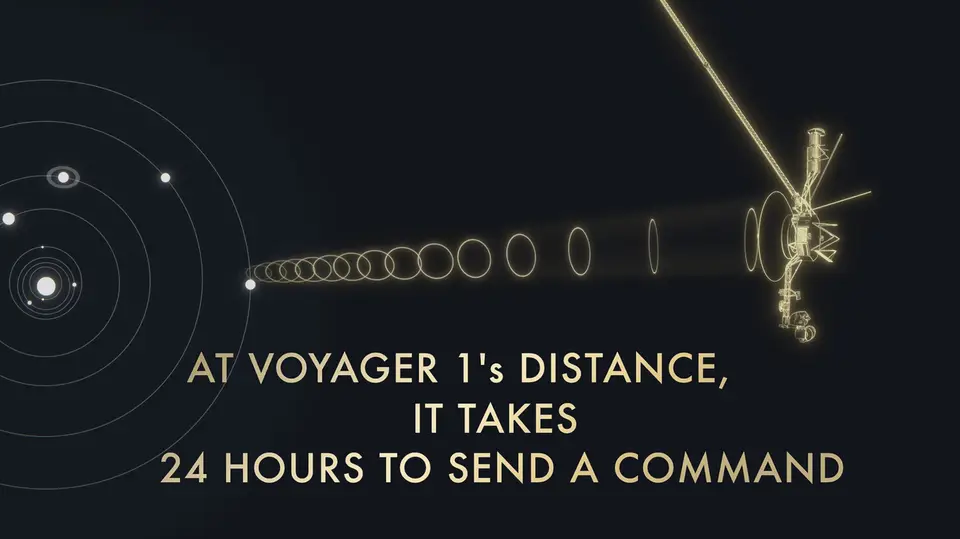
It now takes 24 hours to send a message to Voyager 1, as it reaches a distance that's one light-day away from our planet.
How outlets word it
The words in 11 outlets' headlines on this story, compared word by word. It shows differences in wording, not which is right.
Words only one outlet used
NASA's Voyager 1 space probe is now one light-day away from Earth
Voyager 1 Beat the Odds and Is Still Working a Light-Day Away From Earth
After 49 years, Nasa’s Voyager 1 is one light-day away from us. Can we save this ‘pale blue dot’? |
Guardian · rated Lean left
Voyager 1 reaches ‘one light-day’ milestone
Voyager 1, the farthest human-made object, is now one light-day from Earth
CNN · rated Lean left
Who's covering it
First reported by Los Angeles Times at · 11 outlets in all
- The VergeNASA’s Voyager 1 probe is now one light-day awayAfter traveling through the void of space for 49 years, Voyager 1 has hit a momentous milestone: the spacecraft is now officially one light-day away from Earth, which is, as NASA put it, "very, very far." The probe crossed the milepost on Wednesday at 5:16AM ET, and is now 16.094 billion miles away from our
- EngadgetNASA's Voyager 1 space probe is now one light-day away from EarthIt now takes 24 hours to send a message to Voyager 1, as it reaches a distance that's one light-day away from our planet.
- Wired(subscription required)Voyager 1 Beat the Odds and Is Still Working a Light-Day Away From EarthThe spacecraft stores data on an eight-track tape, but it’s managed to stay in contact with scientists for decades. Now, it’s the first human-made object to travel a light-day away from Earth.
- GuardianAfter 49 years, Nasa’s Voyager 1 is one light-day away from us. Can we save this ‘pale blue dot’? |Since the spacecraft’s 1977 launch, our wonderful and terrible species has done great damage to our planet. Voyager has offered us a clear view of ourselvesImagine traveling nonstop for 49 years, alone in the dark with no destination in sight, powered by curiosity and engineering.Further imagine making that journey not at bullet train or jet plane speed, but much faster: at 37,800 miles per hour, free from friction in a vast sea of cold, soundless space, bombarded by radiation and cosmic rays yet still able to communicate with folks back home.
- Scientific American(subscription required)Voyager 1 reaches ‘one light-day’ milestoneThe space probe Voyager 1 is humanity’s farthest and best-known interstellar “message in a bottle”—but it’s probably not the last
- CNNVoyager 1, the farthest human-made object, is now one light-day from Earth
- Popular ScienceVoyager 1 is one light-day away from Earth, according to NASA estimate‘We did not even conceive of making it into interstellar space. Dream big.’
- New York Times(subscription required)After 49 Years, Voyager 1 Is a Mind-Blowing One Light-Day From EarthLaunched in 1977, the hardy spacecraft is still sending messages back home from a staggering distance in interstellar space.
- CBS NewsVoyager 1 sets distance record of 1 "light day" from EarthVoyager 1 and its sister ship Voyager 2 are still beaming back data from interstellar space as they near their 50th anniversary next year.
- TimeOne Leg on Earth
- Los Angeles Times(subscription required)NASA’s Voyager 1 will soon be so far away that its messages take a day to reach EarthOn Wednesday, after half a century in space, the Voyager 1 spacecraft will be so far from Earth, it will take a full day for light to travel between it and Earth. It's “a tribute to the engineers who designed something that can last that long,” said the last person to lay hands on the spacecraft.